
How to plan a family reunion
How to plan a family reunion step by step, from 12 months out: pick the date together, share the costs and jobs, and plan for every generation.
6 min readUpdated 30 October 2026
A family reunion brings together people who live in different places, have different budgets and want very different things from a weekend: toddlers, teenagers, parents and great-grandparents. This guide covers how to plan one step by step, and how each step works in OohWeGo, a free planner where the whole family shares one plan.
1. Start 9 to 12 months out
The bigger the reunion and the further people travel, the earlier you start. A simple timeline:
- 12 months out: agree who's invited, pick the date and choose the place.
- 9 months out: send a save-the-date, book the lodging and pay deposits.
- 6 months out: send invitations and ask who's coming, with a date to answer by.
- 3 months out: confirm the headcount, the meals and the main activities.
- 1 month out: share the schedule, and finish the to-do and packing lists.
- The week before: confirm bookings, and make sure everyone knows where to be.
A one-day picnic close to home needs 3 or 4 months. A weekend away with flights and a big rental needs the full year.
2. Pick the date together
The date decides who can come, so ask before you choose. Avoid major holidays, and check school terms for the families with kids.
In OohWeGo, start a trip without dates and suggest a few date ranges: 2 to 6 options. Everyone answers Yes, If I must or No for each one, and the plan shows the best fit so far. Set a day the answers are due, then close the poll on the range that works for the most people. It becomes the trip's dates, and everyone is told.
3. Agree the money before you book
Most reunion arguments are about money, so settle how costs are shared before anything is booked, and put a cost per person or per family in the invitation. Common approaches:
- Each household pays its own way for travel and lodging, and shared costs (the venue, a catered dinner, supplies) are split evenly by household.
- Lodging and meals per person, with children paying less or nothing.
- Optional extras (a boat trip, a nicer room) paid only by those who choose them.
OohWeGo's expenses keep track as people pay: log each cost, split it the way you agreed, and see everyone's balance. Turn on Families and each child's share counts with the parent who looks after them, so one person settles up for each family. Budgets for the trip and each category come with Pro.
4. Share the work
Don't plan it alone. Many families pick a small committee, one person from each branch of the family, and give each a job: the venue and lodging, food, activities, money and who's coming.
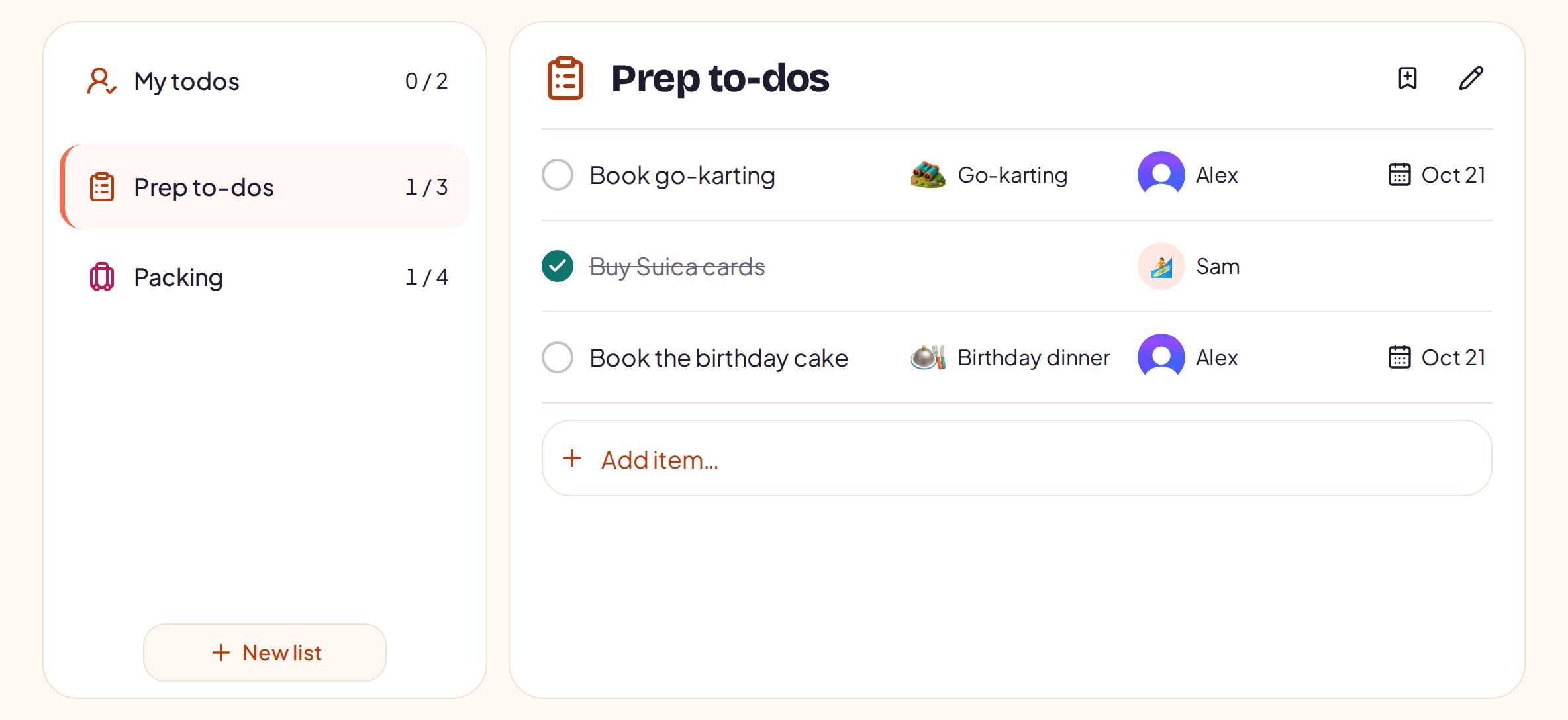
Make each job a to-do on a shared list, with who it's for and when it's due, so everyone can see what's done and what's waiting. Make the committee editors of the trip, so they can plan too.
5. Choose a place that works for every generation
Look for room for everyone to sleep and eat together, step-free access for older relatives, space for kids to run around, and a backup plan for bad weather. One big rental house keeps everyone together more easily than a dozen hotel rooms.
Not sure which place? Save the options to the trip's wishlist, then use Ask the group to let everyone vote, with a day the answers are due.
6. Invite everyone and find out who's coming
Share one invite link with the adults. Children and grandparents who won't use the app don't need accounts: add them as guests, with their age group, and whoever adds them plans for them. If a grandparent later joins with their own invite, they take the guest's place in the plans.
Everyone answers Coming, Maybe or Not coming. Set the date answers are due, and the maybes are reminded the day before.
7. Plan the food without one person cooking it all
Mix it up: one catered or restaurant meal, one potluck and one simple cook-out works for most families. For the potluck, make a list of what's needed (mains, sides, salads, desserts, drinks, ice) and give each item to a family, so you don't end up with six potato salads. Ask about allergies and dietary needs in the invitation.
8. Activities for every generation: split up, then meet back up
Nobody wants the whole family doing everything together for three days. Plan one or two things everyone does together, such as a big dinner, the family photo or a slideshow of old photos, and give people choices for the rest of the time.
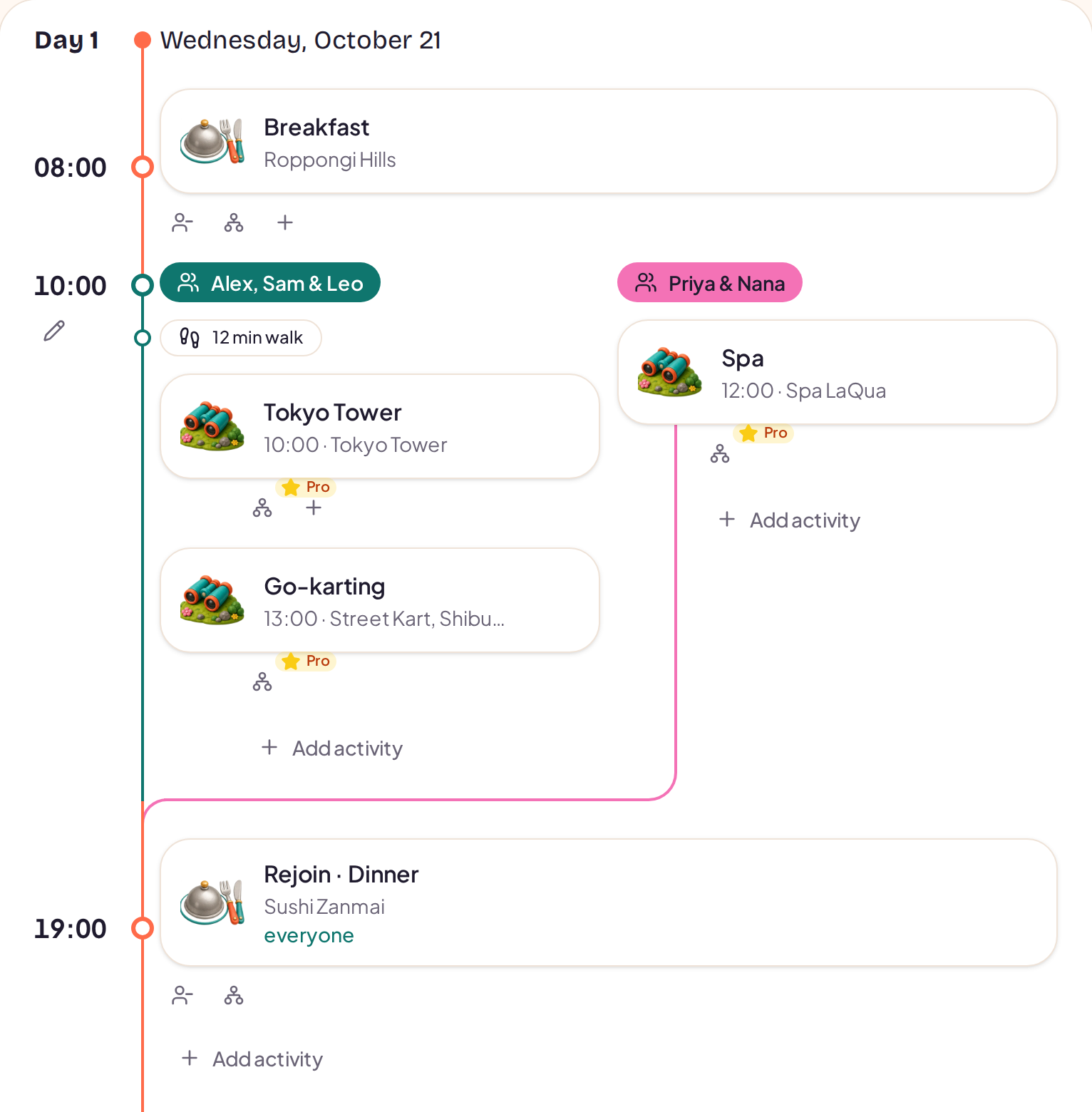
That's what OohWeGo's lanes are for. For the afternoon, the teenagers go kayaking, the little ones go to the playground with a couple of parents, and the grandparents take the scenic drive. The plan shows each group's afternoon and when everyone meets back up for dinner. Leave unplanned time too: the best conversations happen in the gaps.
9. During the reunion
On the day, My day shows each person their own plan on their phone, where the others are, and when to leave for what's next. Celebrating a big birthday or an anniversary? Make it a surprise, hidden from the guest of honour on the shared plan until you reveal it. Want it on paper for relatives without smartphones? With Pro, print the itinerary.
10. Settle up afterwards
Once the weekend is over, everyone's balance is in Expenses: who owes whom, and how much, in as few payments as possible. Mark each payment as settled, and the reunion is done.
Family reunion FAQ
How far in advance should you plan a family reunion? 9 to 12 months for a weekend away, especially with flights or a big rental. 3 or 4 months is enough for a day at a park or a relative's house.
How long should a family reunion last? A long weekend (Friday to Sunday) suits most families: long enough to be worth the travel, short enough that most people can take the time off.
How much does each family pay? It depends on where you go and what you book. Add up the shared costs (venue, catered meals, supplies) and divide them by household or by adult, charge lodging and meals per person, and let children pay less. Tell people the amount before they commit.
What committees does a family reunion need? Usually four or five jobs: venue and lodging, food, activities, money, and invitations and answers. In a small family, one or two people can hold several.
What should you avoid? Planning every minute, choosing the date without asking, leaving the money until after the bookings, and planning activities that only suit one age group.
More guides
All guides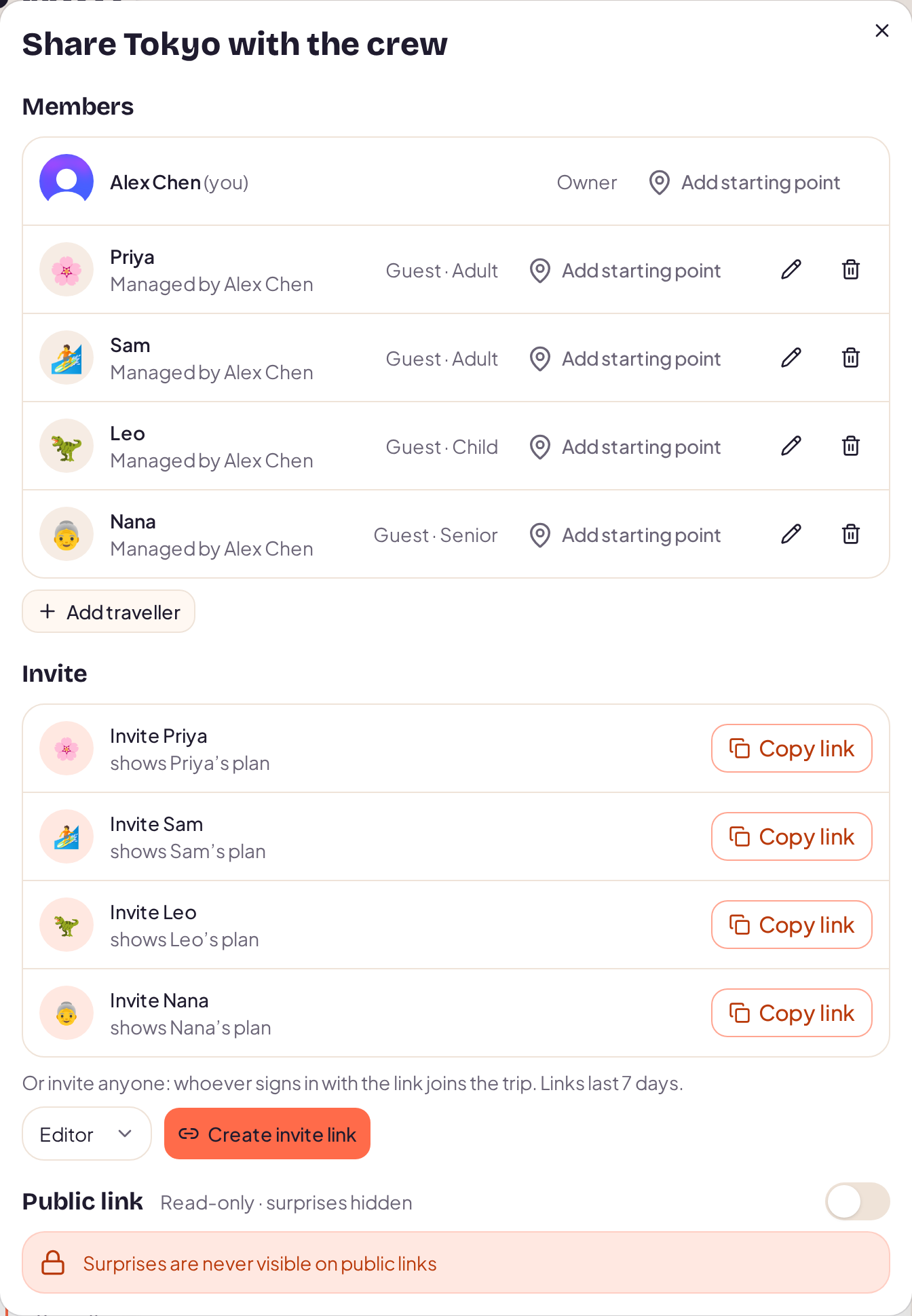 3 min read
Start a trip and invite your group
Make a shared group trip in a couple of minutes, invite friends with one link, and add kids or grandparents as guests without accounts.
Read the guide- 2 min read
Split into lanes and meet back up
Let your group do different things at the same time on one shared itinerary, then show everyone where and when you'll meet back up.
Read the guide 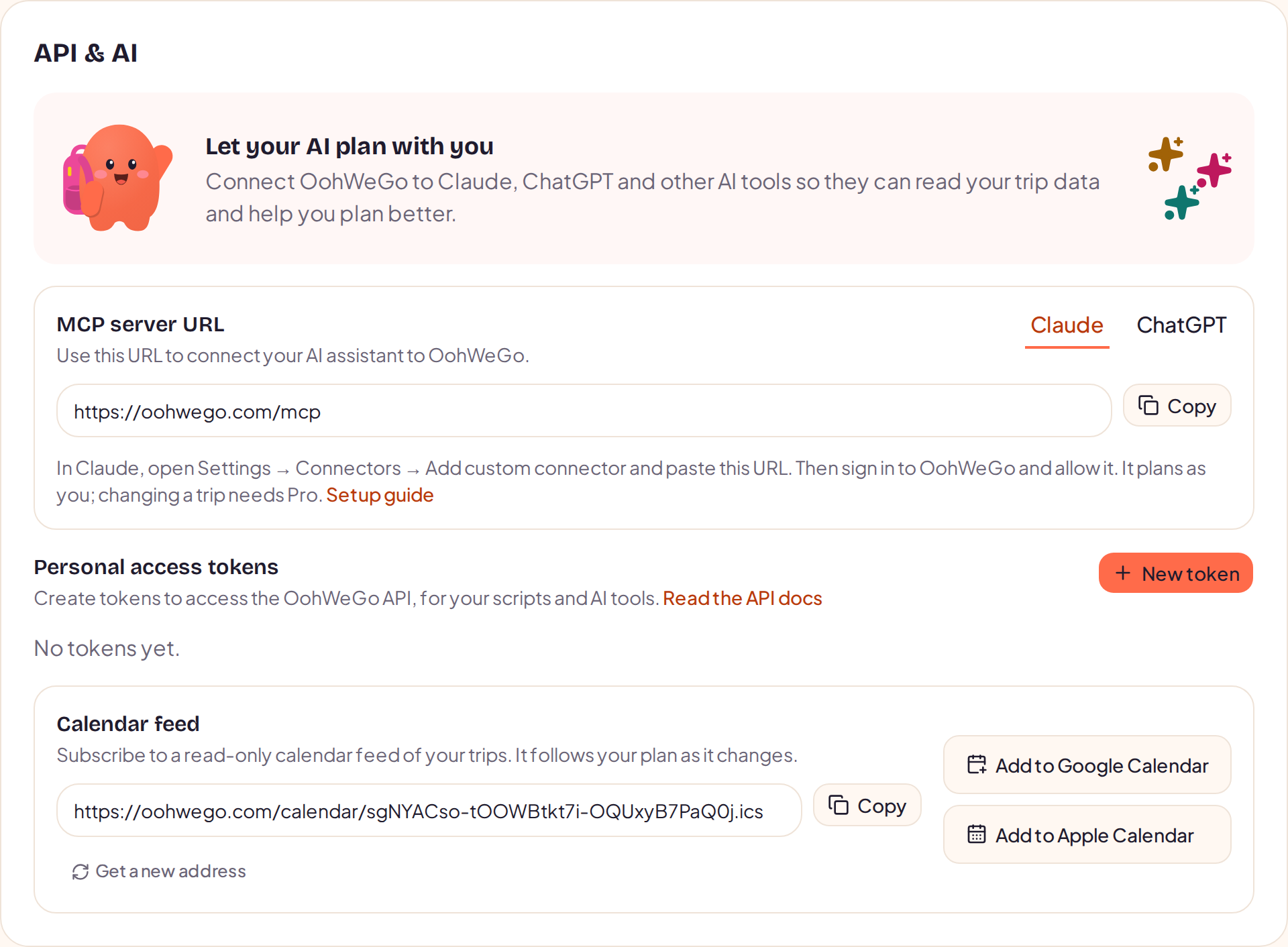 2 min read
Plan your trip with Claude or ChatGPT
Connect OohWeGo to Claude or ChatGPT, and your AI can read your group's trips and plan them with you: find places, fill a day and split the group up.
Read the guide

Plan your next trip together
Free for any group size.